
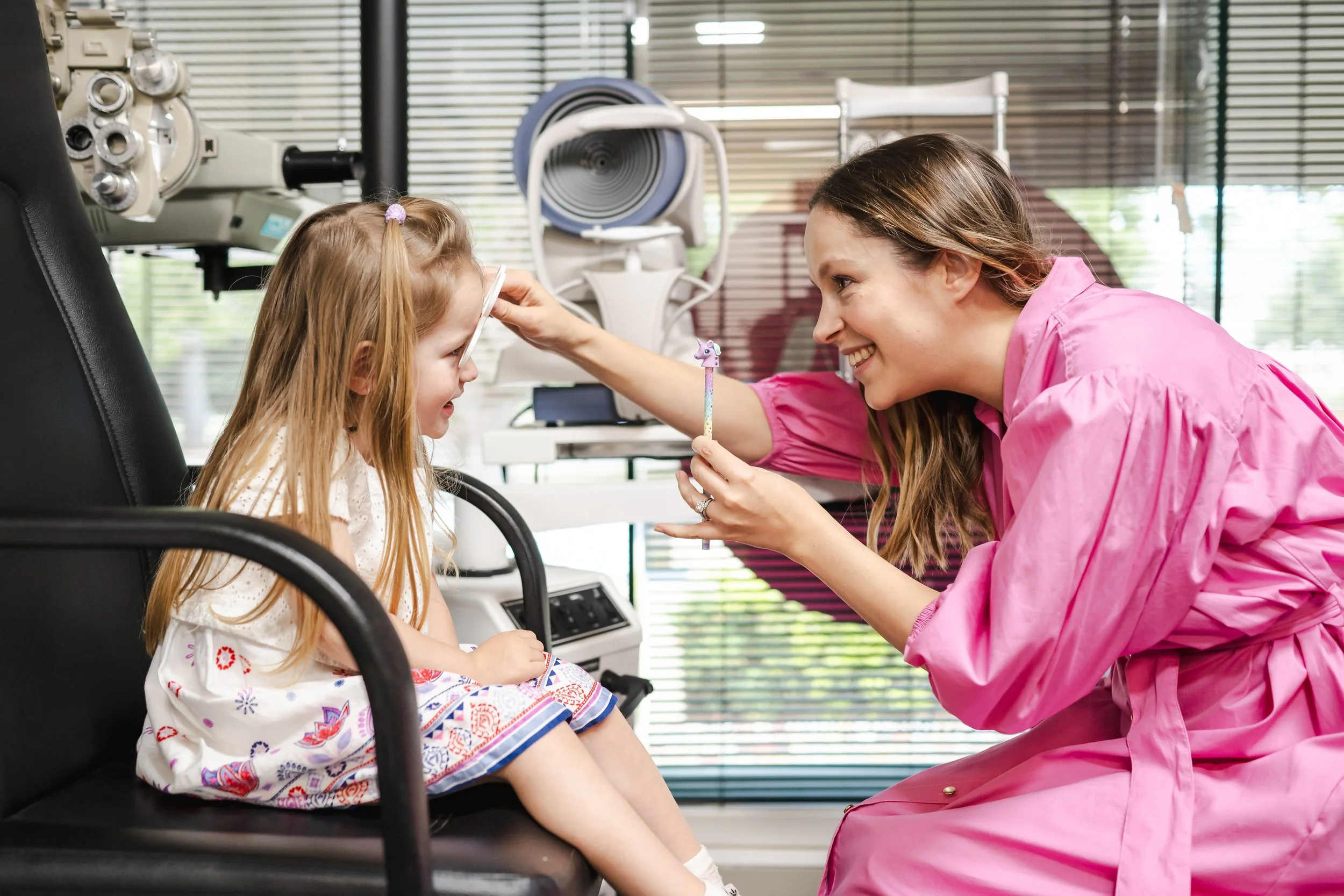
CHILDREN’S OPTOMETRIST TOOWOOMBAHelping little eyes see, learn and grow.
Good vision plays a big role in how children learn, play and experience the world around them. But when something isn’t quite right, kids don’t always know how to tell us.
At LA Optical, children’s optometry is one of our special areas of interest. We provide thorough, age-appropriate eye examinations in a relaxed and welcoming environment, helping parents understand how their child’s vision is developing and giving kids the best opportunity to see comfortably and confidently.
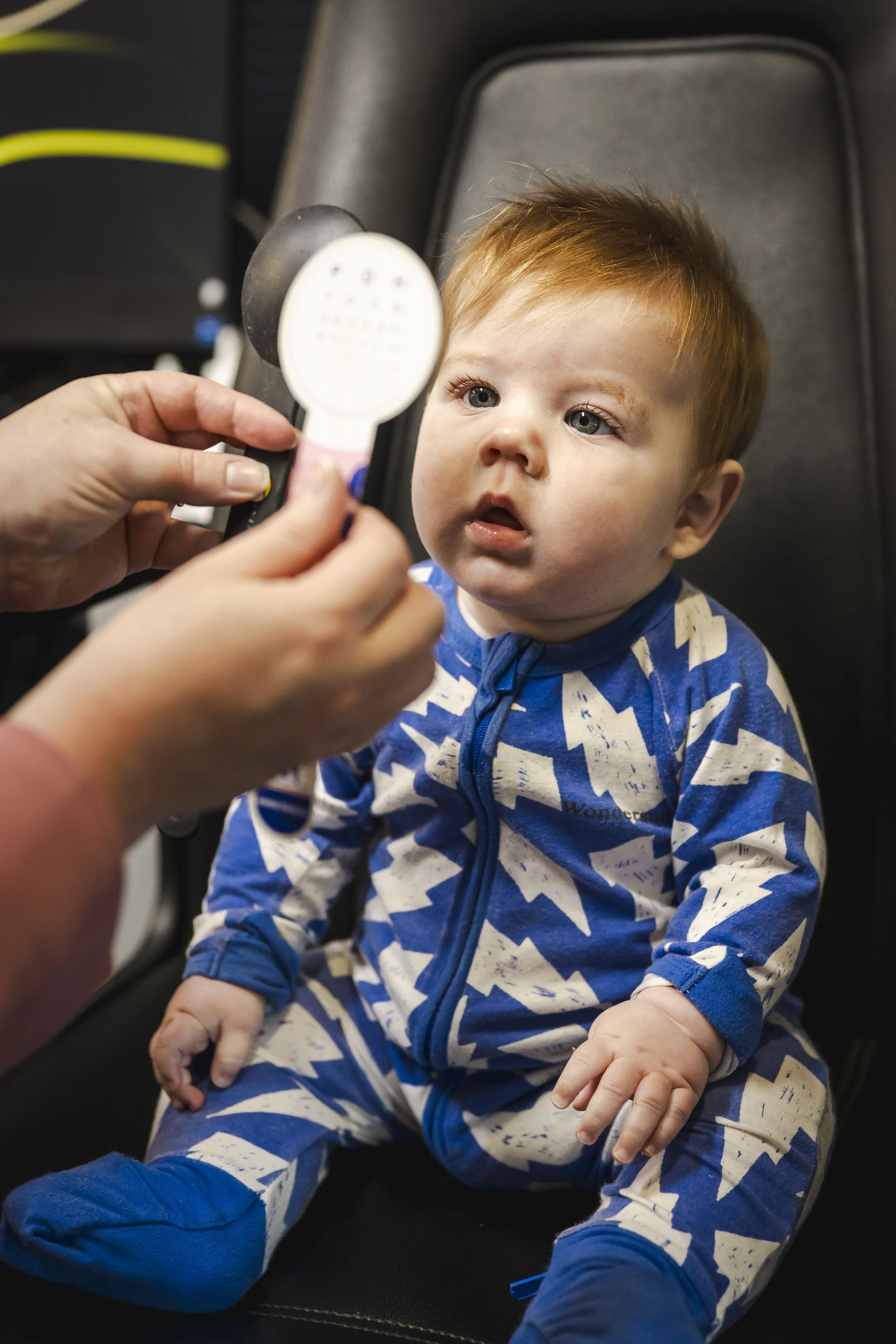
Would your child know if they weren’t seeing clearly?
For children, the way they see the world is simply normal to them.
They might not realise the words on the page shouldn’t blur. They may assume everyone gets tired eyes when they read. And if they’ve always struggled to see the board clearly, they have nothing else to compare it to.
Sometimes vision concerns are obvious. Other times, the clues can show up in your child’s learning, concentration or behaviour instead.
That’s why children’s eye examinations look at much more than whether your child can read the bottom line of an eye chart.
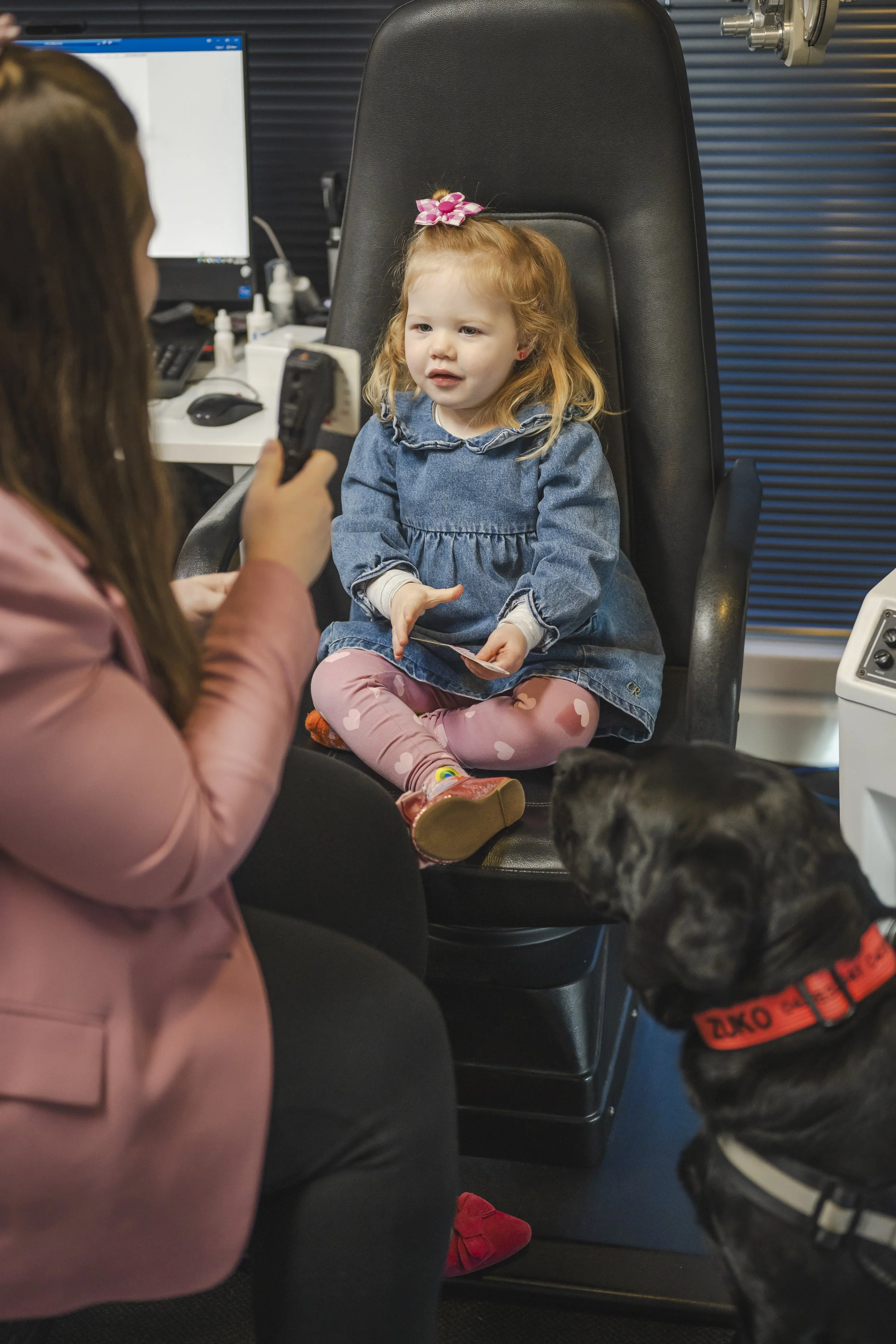
A different kind of eye test for kids.
Children aren’t simply smaller adults, and we don’t treat their eye examinations that way.
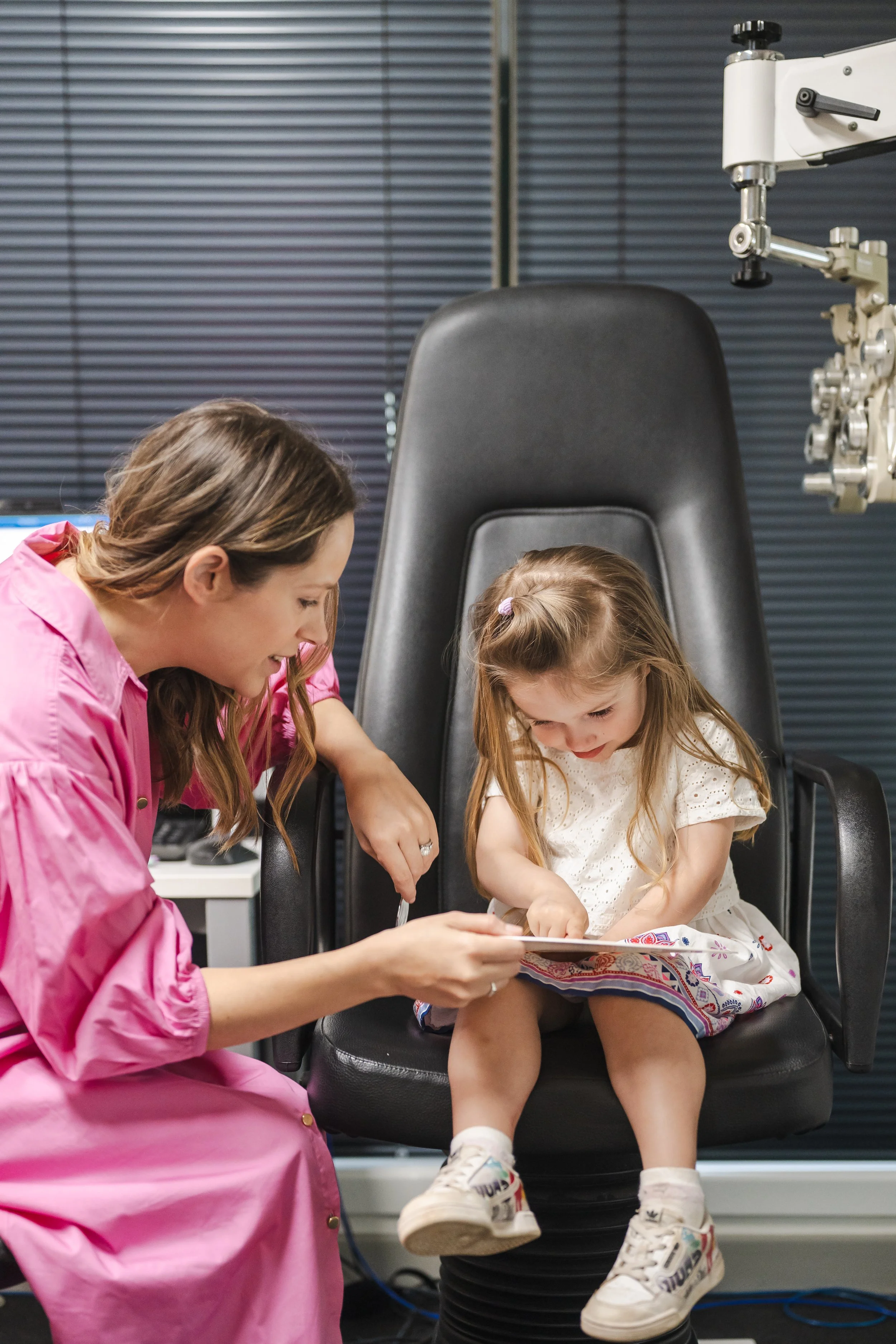
As optometrists with a particular interest in children’s vision, and as mums ourselves, we understand that getting useful information from a child sometimes requires a little patience, flexibility and creativity.
We take our time, explain things in an age-appropriate way and adapt the examination to your child. Our goal isn’t simply to complete a checklist. It’s to understand how their eyes are working together and whether their vision is supporting them in everyday life.
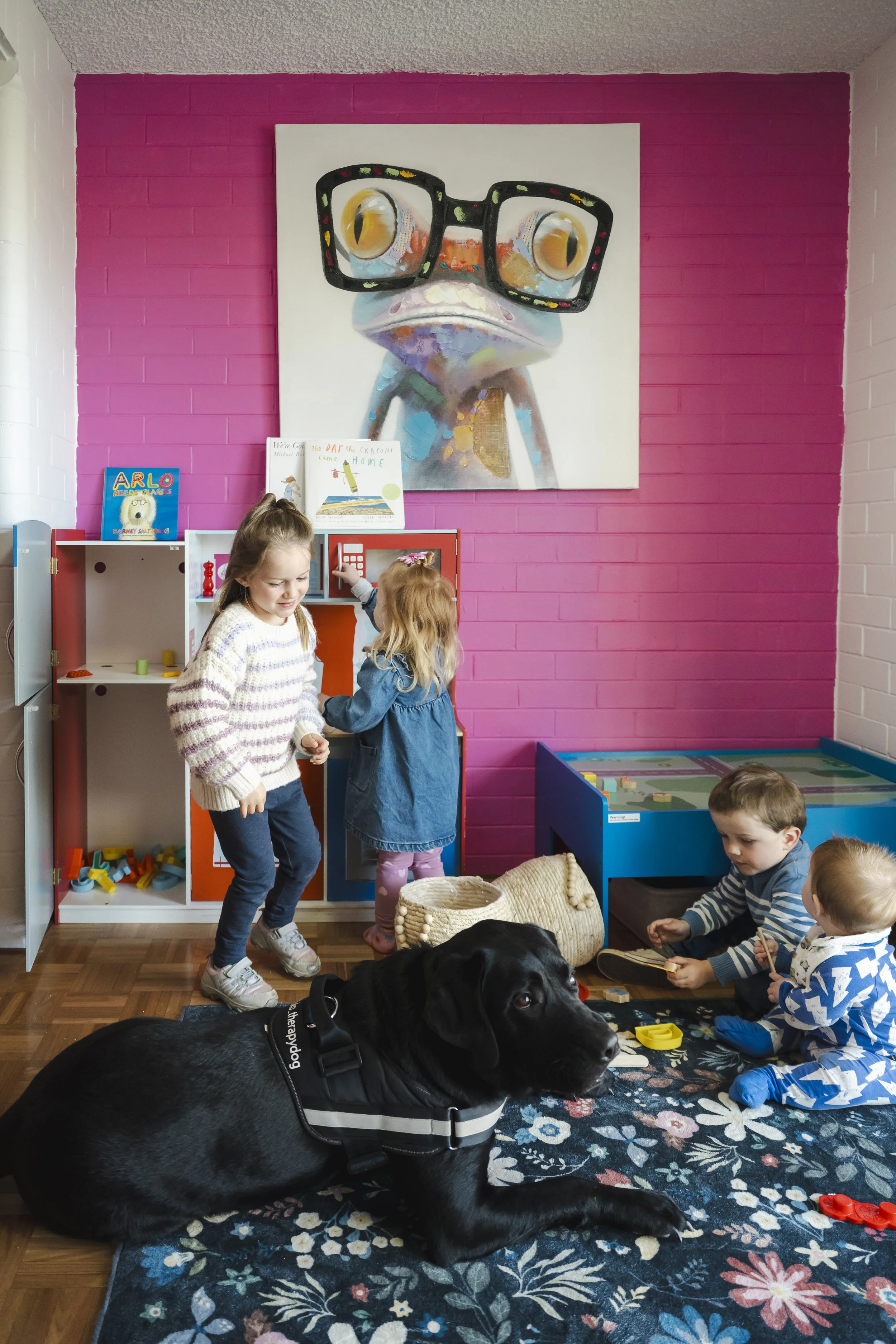
And if your child feels unsure about visiting the optometrist, Zuko our therapy dog is often around to help break the ice.
His calm, gentle nature can be particularly helpful for children who feel nervous or unsure about their appointment.
Sometimes having a friendly dog nearby makes a new experience feel much less intimidating. Sometimes kids simply want to tell him everything that happened at school.
Zuko is excellent at both.
Aligned Paediatric OptometristsA little extra expertise for little eyes.
Abby Ussher and Lauren Hess are Aligned Paediatric Optometrists, having completed the Paediatric Optometry Clinical Education Program and formally aligned with Children’s Health Queensland and Queensland Children’s Hospital through the Paediatric Optometry Alignment Program (POAP).
This means they follow evidence-based paediatric management and referral pathways and can communicate directly with the orthoptists and ophthalmologists at Queensland Children’s Hospital when required.
For families, that can mean more connected care. If your child has been referred to Queensland Children’s Hospital, is waiting for an ophthalmology appointment or has been discharged for ongoing optometry care, Abby and Lauren can provide appropriate assessment and management closer to home in Toowoomba.
They can also co-manage children seeing private paediatric ophthalmologists in Brisbane.
Aligned Optometrists are recommended by Queensland Health for children who don't pass their Prep vision screening. However, even children who pass their screening can benefit from regular comprehensive eye examinations, as school screening only assesses certain aspects of vision.
MYOPIA IN CHILDRENShort-sightedness is something we can actively manage.
Myopia, commonly known as short-sightedness, causes distant objects to appear blurry and often develops during childhood.
Rather than simply updating a child’s glasses as their prescription changes, modern myopia management can include strategies designed to help slow the progression of myopia in suitable children.
Why Myopia Control Matters
Myopia has become increasingly prevalent worldwide, with more children being diagnosed at younger ages. High myopia (severe nearsightedness) is associated with a higher risk of eye diseases such as cataracts, glaucoma, and retinal detachment later in life. Therefore, managing and controlling myopia progression early on is crucial for long-term eye health.
Methods of Myopia Control
Orthokeratology (Ortho-K): This non-surgical method involves wearing specially designed gas permeable contact lenses overnight. These lenses reshape the cornea while you sleep, temporarily correcting myopia so that glasses or daytime contact lenses are not needed during waking hours. Studies suggest that Ortho-K may also slow down the progression of myopia in children. Find out more about Ortho-K here.
Specialised Soft Contact Lenses: These contact lenses have different powers in different zones of the lens. They work by reducing eye strain and focusing fatigue associated with near tasks, potentially slowing myopia progression.
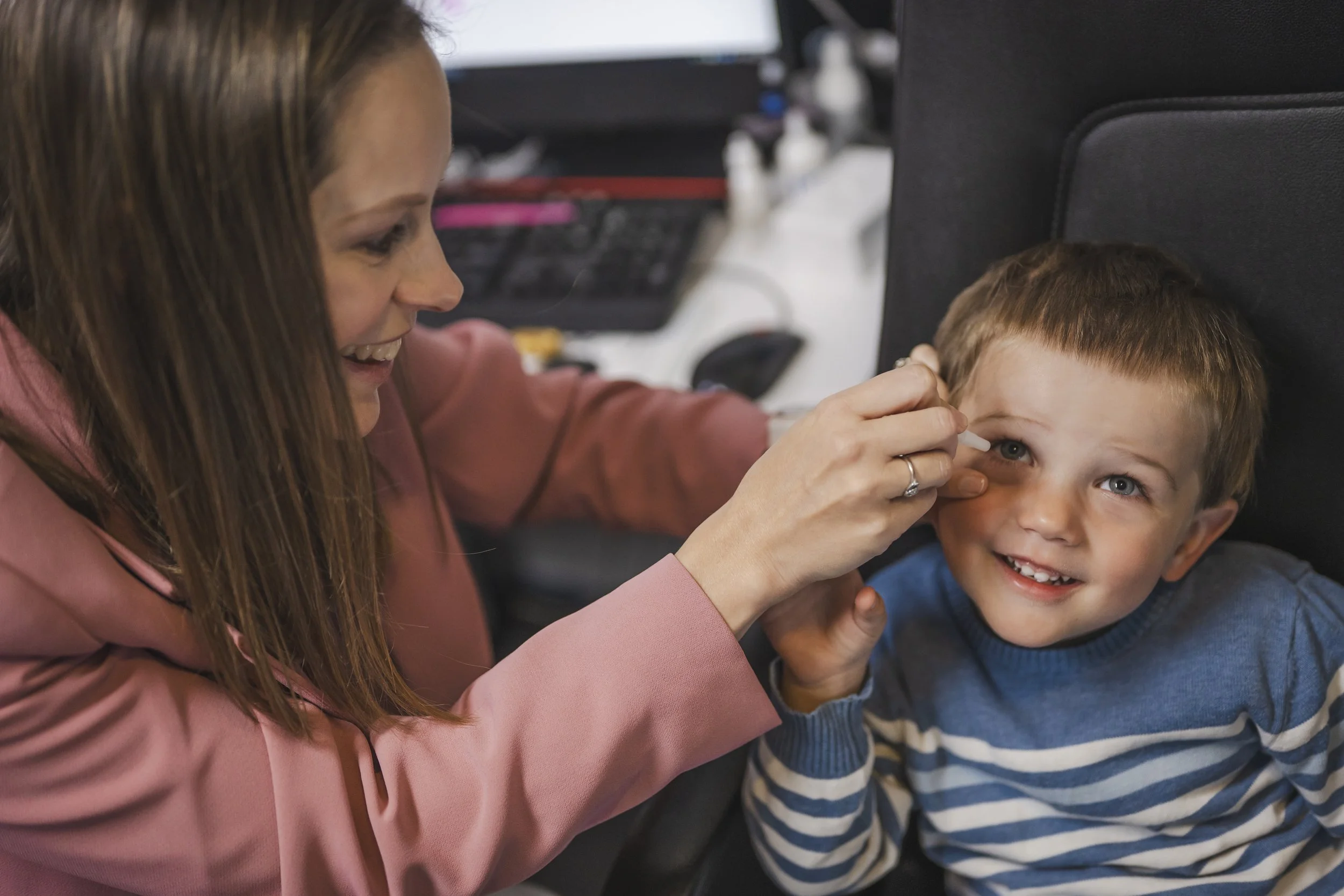
Atropine Eye Drops: Low-dose atropine eye drops have been shown to effectively slow myopia progression in children. They work by dilating the pupil and temporarily relaxing the focusing mechanism of the eye.
Environmental and Behavioural Changes: Encouraging outdoor activities and reducing near work activities, such as prolonged use of digital devices, may also help in controlling myopia progression.
Early intervention and regular eye exams are crucial for managing myopia in children. If we identify myopia during your child’s eye examination, we’ll talk you through what it means, discuss the options available and recommend an approach based on your child’s individual eyes, lifestyle and needs.
There’s more to children’s vision than seeing 20/20.
FREQUENTLY ASKED QUESTIONSGood children’s optometry isn’t only about helping kids see better. It’s about giving parents clarity and confidence too.
-
Children don’t need to be able to read before they can have their eyes examined. If you have any concerns about your child’s vision, eye alignment or visual development, an eye examination can be performed from a young age. Our team can also advise you on appropriate eye examination timing as your child grows.
-
A children’s eye examination can look at much more than how clearly your child can read an eye chart. Depending on their age and needs, we can assess:
vision and prescription, including long-sightedness, astigmatism and myopia
how the eyes work together
depth perception
eye tracking and movement
binocular vision
overall eye health.
We recommend a comprehensive eye examination before your child starts Prep, or earlier if you, your child, their GP or another health professional has concerns about their vision.
-
They may. Children often don’t realise their vision is different because they have nothing to compare it with. Some vision issues also have few obvious symptoms, which is why an eye examination can be worthwhile even when your child hasn’t complained.
-
No. We can adapt eye examinations for different ages and developmental stages, using age-appropriate methods that don’t rely solely on reading letters from an eye chart.
-
Sometimes there are clues such as squinting, headaches, sitting close to screens or difficulty seeing at school, but not every child will show obvious signs. An eye examination allows us to assess their vision and determine whether glasses would be beneficial.
-
Vision is involved in many classroom activities, including reading, writing, using screens and seeing information presented at a distance. If a vision issue is making these tasks difficult or uncomfortable, it can create an additional hurdle for a child. An eye examination can help determine whether vision may be contributing to the difficulties you’ve noticed.
-
Myopia, or short-sightedness, means close objects are generally seen more clearly than objects further away. It commonly develops during childhood and can progress as children grow. If your child develops myopia, we can discuss suitable correction and management options with you.
-
That’s completely fine. We take a relaxed, patient approach and explain what we’re doing in a way your child can understand. We want children to develop a positive relationship with looking after their eyes, rather than feeling that an eye examination is something to worry about. Zuko may also be available to provide some four-legged moral support.
-
Zuko generally attends the practice when Abby is working. If meeting Zuko would help your child feel more comfortable, mention it when booking and the team can let you know when he is expected to be in the clinic.
CHILDREN’S EYE TESTS IN TOOWOOMBAGive their eyes the best start.
Whether you’ve noticed something that doesn’t seem quite right, your child is having difficulty at school or you simply want reassurance that their vision is developing as it should, we’re here to help.
Book a children’s eye examination with LA Optical and give yourself a clearer understanding of how your child sees their world.